20 Common HR Interview Questions and Answers (2026)
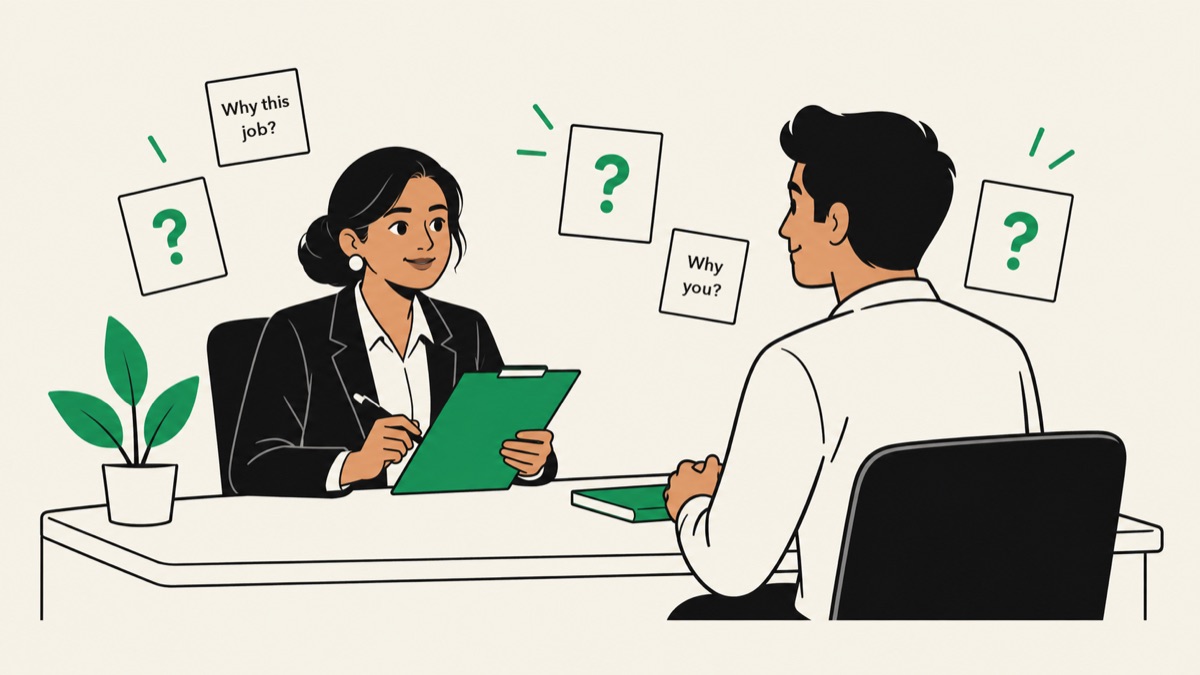
The HR round has a reputation for being the easy one. It usually isn't hard, but people still get rejected in it, mostly for giving vague answers or saying something that makes the recruiter worry they will leave in six months.
Quick answer: The most common HR interview questions are "tell me about yourself", "why do you want to join us", "strengths and weaknesses", "why are you leaving", "salary expectations" and "notice period". Prepare short, specific answers with one real example each, and always have a question ready for the end.
Below are the questions that show up most often, grouped by what the interviewer is trying to learn. For each one there is a short note and a sample answer you can reshape to fit your own story.
Questions about you
1. Tell me about yourself
Keep it to about a minute: what you do now, one or two relevant past experiences, and why this role is next. There is a full guide with sample answers in how to answer tell me about yourself.
2. What are your strengths?
Pick one or two strengths that matter for the job and back each with a real example. "I am good at explaining technical things to non-technical people. In my last project I ran the weekly demo for the client's operations team" is far better than a list of adjectives.
3. What is your biggest weakness?
Name a real weakness that is not a core requirement of the job, and say what you are doing about it. "I used to say yes to every request and end up overloaded. Now I write down my week's priorities on Monday and check new requests against them."
4. Where do you see yourself in five years?
They want to know if your plans fit the company. Talk about skills and responsibility, not job titles at other companies. "I'd like to be the person the team trusts with the hardest problems in this area, and ideally be mentoring newer people by then."
5. How would your friends or colleagues describe you?
Choose words people have actually used about you, and add a one-line example. Avoid "perfectionist".
Questions about the job and company
6. Why do you want to work here?
This is where preparation shows. Mention something specific: a product you have used, the kind of clients they serve, a team you read about. Generic answers like "it's a reputed company" tell them you applied everywhere.
7. Why should we hire you?
Connect two or three of their requirements to proof from your past. Say it confidently, without putting other candidates down.
8. What do you know about our company?
Spend 20 minutes on their website, recent news and LinkedIn before the interview. Know what they sell, who their customers are and roughly how big they are.
9. Why are you leaving your current job?
Stay positive and future focused. "I have learned a lot, and I'm now looking for work on larger projects" works. Criticising your manager never does.
10. Why is there a gap in your resume?
Be brief and honest, then move to what you did during the gap and why you are ready now. Nobody expects a dramatic explanation.
Questions about how you work
11. Tell me about a time you handled a conflict
Use the situation, task, action, result format. Focus on what you did to resolve it, not on who was wrong.
12. Describe a failure and what you learned
Pick a real, moderate failure. Spend most of the answer on what you changed afterwards.
13. How do you handle pressure or tight deadlines?
Give one example of a crunch you actually went through and how you prioritised.
14. Do you prefer working alone or in a team?
The safe and usually true answer is both, with an example of each. Lean towards whatever the role needs.
15. Are you comfortable with night shifts, travel or relocation?
Answer honestly. If you say yes and you mean no, it will come back later. If there are conditions, state them clearly now.
Questions about money and logistics
16. What is your current CTC?
State it accurately, including the split between fixed and variable if you know it. Companies often verify this with payslips.
17. What are your salary expectations?
Research the range for the role and city, and give a range with your target near the bottom of it. If you can, first ask what budget they have in mind.
18. What is your notice period?
Know the exact number of days from your offer letter, and whether buyout is possible. Many offers in India fall through because of long notice periods, so be clear.
19. Do you have other offers?
If you do, it is fine to say so without naming the company or amount. If you don't, say you are in process with a few companies, which is probably true.
The last question
20. Do you have any questions for us?
Always say yes. Ask about what success looks like in the first three months, how the team is structured, or what the interviewer enjoys about working there. Do not ask about leave policy or salary in this slot unless they bring it up.
How to prepare in one evening
Write short answers for the first ten questions. Say each one out loud once. Then pick three stories from your work or studies (a success, a conflict, a mistake) that you can reuse across many behavioural questions. That covers most of the HR round.
And if you are worried about blanking on a question you did not expect, SilentlyAI can suggest an answer on your screen during the call, so you have something to work from.
Frequently asked questions
What is asked in an HR interview round?
HR rounds cover your background, reasons for applying, strengths and weaknesses, behavioural examples, current and expected salary, notice period, and willingness to relocate or work shifts.
How do I pass the HR round as a fresher?
Research the company, prepare short answers to the ten most common questions, have two or three college or internship stories ready, and be honest about location and shift preferences.
Can I get rejected in the HR round?
Yes. Common reasons are vague answers, negative comments about a past employer, unrealistic salary expectations, a long notice period, or unclear reasons for wanting the job.
How long does an HR interview take?
Most HR rounds take 15 to 30 minutes, though some companies combine HR and managerial questions into a longer conversation.