Sales Interview Questions and "Sell Me This Pen" Answer
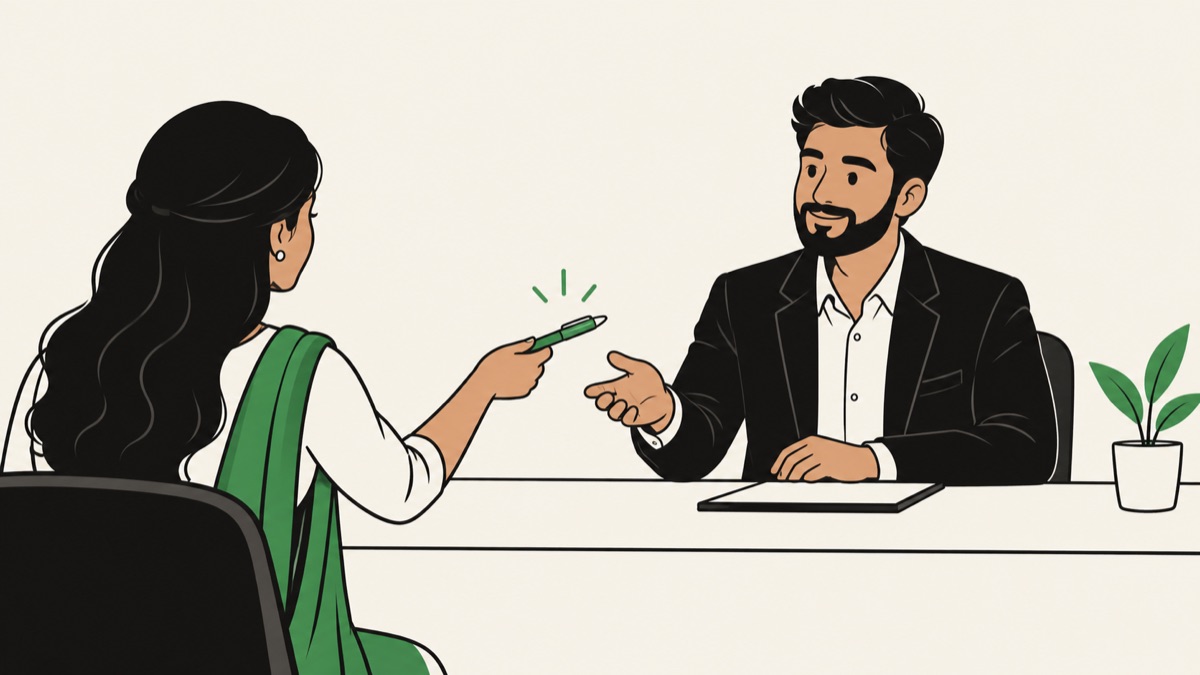
Sales interviews are a little different from other interviews, because the interview itself is a sales test. You're selling yourself, and the interviewer is watching how you ask questions, listen, handle pushback and close. Candidates who treat it like an HR round often miss this.
Quick answer: To answer "sell me this pen", don't start by describing the pen. Ask questions first: how often they use a pen, what they use it for, what they dislike about their current one. Then pitch the pen as the solution to the need they described, handle any objection, and ask for the sale.
"Sell me this pen"
This is the most famous sales interview question. The mistake almost everyone makes is launching into features: "This pen has smooth ink, a comfortable grip, it's very stylish..."
The interviewer wants to see if you discover the need first.
A strong answer
You: Before I tell you about it, can I ask when you last used a pen?
Interviewer: This morning, signing a delivery receipt.
You: Do you sign a lot of documents in a day?
Interviewer: Quite a few. Contracts, approvals.
You: When you sign a contract with a client in front of you, how important is it that the pen works first time and looks professional?
Interviewer: Pretty important, I suppose.
You: That's exactly what this pen is for. It writes on the first stroke every time, it doesn't smudge on glossy paper, and it looks like something a senior person would carry. For the number of contracts you sign, it's a small thing that makes every meeting look sharp. Shall I put you down for a box of five?
The structure: question, listen, connect the product to their need, close. You can use it for any object they hand you.
Common sales interview questions
Why do you want to work in sales?
Be honest and specific. Good answers talk about enjoying conversations with people, being motivated by targets, and liking that results are visible and measurable. Avoid "because I'm good at talking".
Tell me about a time you missed a target
In Q2 last year I reached 82 percent of target. I looked at my pipeline and saw I'd spent too much time on large accounts that were slow to close. In Q3 I split my time 60-40 between quick-close and large accounts, and I reached 108 percent.
Interviewers want to see that you analyse and adjust, not that you never miss.
How do you handle rejection?
I treat most "no" answers as "not now". I log the reason, and I follow up in a few months if anything changes. Rejection doesn't bother me as much when I'm tracking my numbers weekly, because I can see the calls that turn into meetings.
How do you handle an objection like "it's too expensive"?
I'd first ask what they're comparing it to. Often the price objection is really about value or timing. If it's value, I'd go back to the problem they told me about and what it's costing them. If it's budget, I'd look at a smaller starting package or a later start date.
Walk me through your sales process
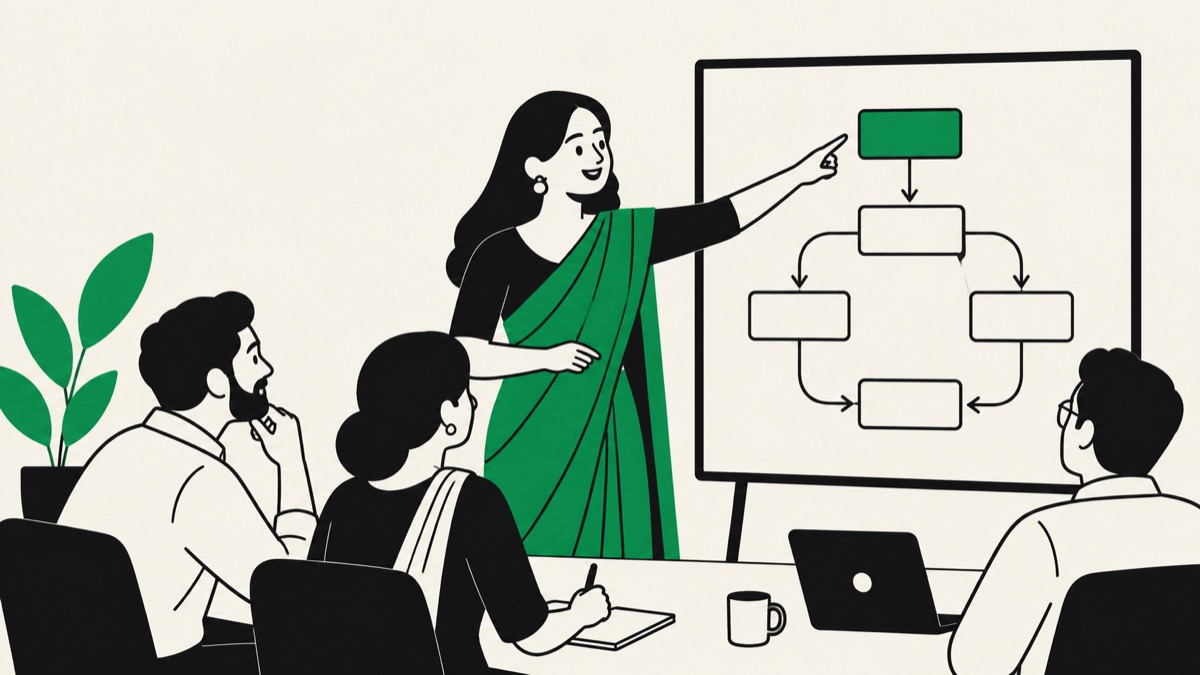
Describe the stages: prospecting, qualifying, discovery, demo or proposal, handling objections, closing, and follow-up. Mention the tools you use, such as a CRM, and your activity numbers if you know them.
What was your target and achievement?
Know your numbers exactly: target, achievement percentage, deal sizes, and number of accounts. Vague answers raise doubts fast in sales interviews.
Sell me our product
Research their product and customers before the interview. Use the same structure as the pen: ask questions about the interviewer's situation first.
For freshers applying to sales roles
You may not have sales numbers, but you probably have examples of persuading people:
- Getting sponsors for a college fest.
- Selling tickets or merchandise.
- Convincing a group to adopt your idea in a project.
- A part-time job in retail or a call centre.
Use these with numbers where possible: "We raised 80,000 rupees from 12 local sponsors."
What interviewers watch for
- Do you ask questions before pitching?
- Do you listen and use what they said?
- Are you confident without being pushy?
- Do you ask for the close?
- Do you know your numbers?
At the end of the interview, "close" it too: "Based on what we've discussed, is there anything that would stop you from moving me to the next round?" That's a sales move, and in a sales interview it's usually welcome.
Behavioural questions
Many sales interview questions are "tell me about a time" questions. Prepare them with the STAR method.
If you want backup on a live call with a tough role-play, SilentlyAI can show suggested lines on your screen when you ask.
Frequently asked questions
What is the best answer to "sell me this pen"?
Ask questions to find out how the interviewer uses a pen and what matters to them, then present the pen as the solution to that need and ask for the sale.
What questions are asked in a sales interview?
Common ones include why sales, your target and achievement, handling rejection, handling objections, your sales process, and role-plays like "sell me this pen".
Can a fresher get a sales job without experience?
Yes. Show persuasion and resilience through examples like fest sponsorships, part-time jobs or college projects, and show that you're comfortable with targets.
How do I prepare for a sales role-play interview?
Research the product and customers, practise the question-listen-pitch-close structure, and prepare responses to common objections like price and timing.